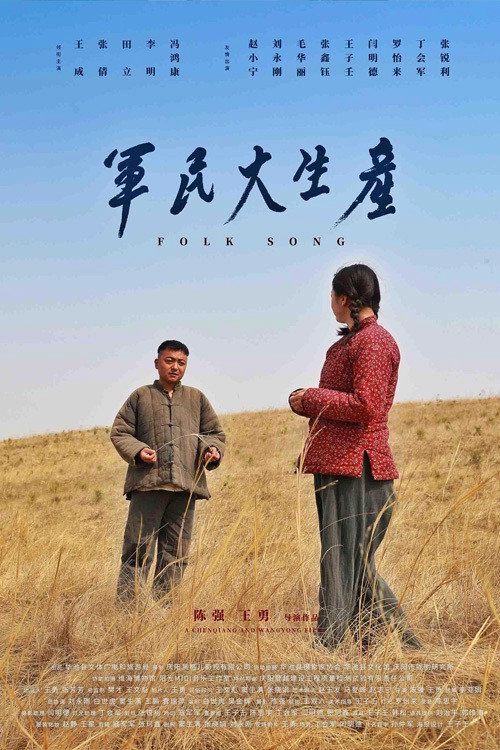
简介:After the outbreak of the War of Resistance Against Japan, due to the frenzied attacks of Japanese imperialism and the intensified economic blockade imposed by the Kuomintang diehards on the Shaanxi-Gansu-Ningxia Border Region, the soldiers and civilians in the border region's anti-Japanese base areas faced severe shortages of clothing, food, and daily necessities. In response to this grim situation, Chairman Mao Zedong issued the call "We will produce what we need ourselves, so we will have ample food and clothing" and adopted the policy of developing the economy to ensure supply, planning to launch a massive military-civilian production campaign across the border region. It was at this time that Zhang Hanhui's unit passed through Chenghao Township in the Nanliang area. On the desolate Loess Plateau of northwest China, he heard a local folk song, "Tuī Chǎo Miàn" (Pushing Flour), which haunted his dreams. After several twists and turns, he returned to Chenghao Township three times. During this period, he witnessed the vigorous production campaign unfolding on this land and became privy to a revolutionary love story between Xiuxiu and Zhuangzhuang. Inspired by this, he took the local folk song "Tuī Chǎo Miàn" as the basis, rewrote the lyrics, and created the revolutionary song "Jūn Mín Dà Shēng Chǎn" (Military-Civilian Mass Production). This song was born in the Nanliang area of Longdong, Gansu Province, and from there it resonated across the whole nation.
On Nonto, we provide comprehensive information about the movie "Folk Song", including detailed plot summary, cast list, director and interesting facts about the film. We also update ratings, audience reviews and recommendations for related movies, so that Indonesian users can easily find the best movie viewing choices.


 0.0
Movies
0.0
Movies